-
-
61A, Sompura Industrial Area, 1st Stage, Dobbaspet, Karnataka - 562111
Advancing Excellence in Heat Treatment
Subbaiah Enterprises (Dabaspete)
Established in 2020, Subbaiah Enterprises Dabaspete has grown into a cornerstone of the heat treatment industry, strategically situated in Dabaspete, Bengaluru Rural, Karnataka. Founded by Mr. Subraya K. S., a visionary metallurgist with over 40 years of experience, the company was built on the principle of offering comprehensive steel heat treatment solutions under one roof. In a short span, it has evolved into a trusted partner for industries requiring precision and durability in steel components via reliable and consistent Heat Treatment solutions. Under the leadership of Mr. Karthik Soudri—Partner, Plant Head, and Metallurgist—the facility combines technical expertise with operational efficiency, ensuring adherence to global quality standards.
The leadership team blends experience and innovation. Mr. Subraya K. S., leveraging his deep knowledge of metallurgy, laid the groundwork for the company’s technical excellence. Mr. Karthik Soudri, a metallurgist with over a decade of hands-on expertise in Heat Treatment including process optimization and lean manufacturing, drives day-to-day operations, earning recognition from industry peers for his contributions to advancing heat treatment methodologies. Their collaborative approach fosters a culture of continuous improvement and client-centric innovation focusing on zero-defect policy.
Infrastructure: An ISO 9001:2015 certified plant with a built-up area of 25000 sq. ft. in a 1.5 acres plot, it is one of the largest future-ready Heat Treatment plant in Bengaluru North with ample space for cutting edge machineries and, further expansion as needed.
Hardening & Tempering
-
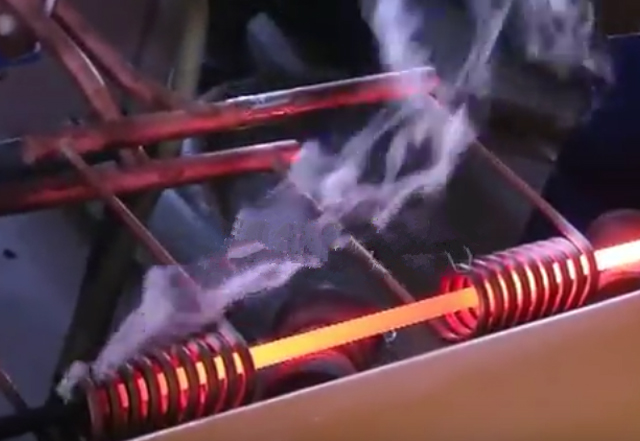
Hardening involves heating steel above its critical point and rapidly quenching it to increase hardness and strength.
-
Tempering follows hardening and involves reheating to a lower temperature to reduce brittleness while retaining strength and toughness.
What it does:
-
Tool steels, wear-resistant machine parts.
-
Dies, cutting blades, spindles, shafts.
Best suited for:
-
High hardness and strength with controlled ductility.
-
A balance of wear resistance and toughness for demanding applications.
Ideal if you’re looking for:
Carbonitriding
-
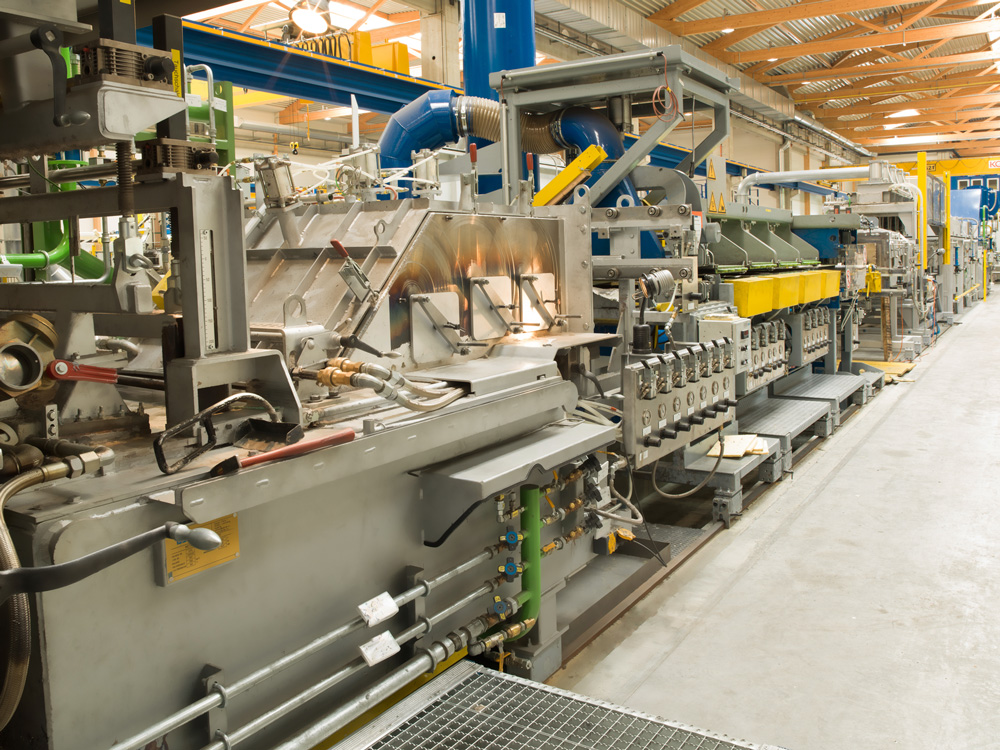
Carbonitriding is a modified version of carburizing where both carbon and nitrogen are diffused into the surface.
-
This is done at slightly lower temperatures (around 800°C–880°C), providing better wear resistance and surface fatigue strength.
What it does:
-
Small precision parts or high-volume production components.
-
Examples: Automotive fasteners, pins, bushings, pump parts.
Best suited for:
-
Surface hardness with added resistance to softening.
-
Minimal part distortion.
Ideal if you’re looking for:
Annealing
-
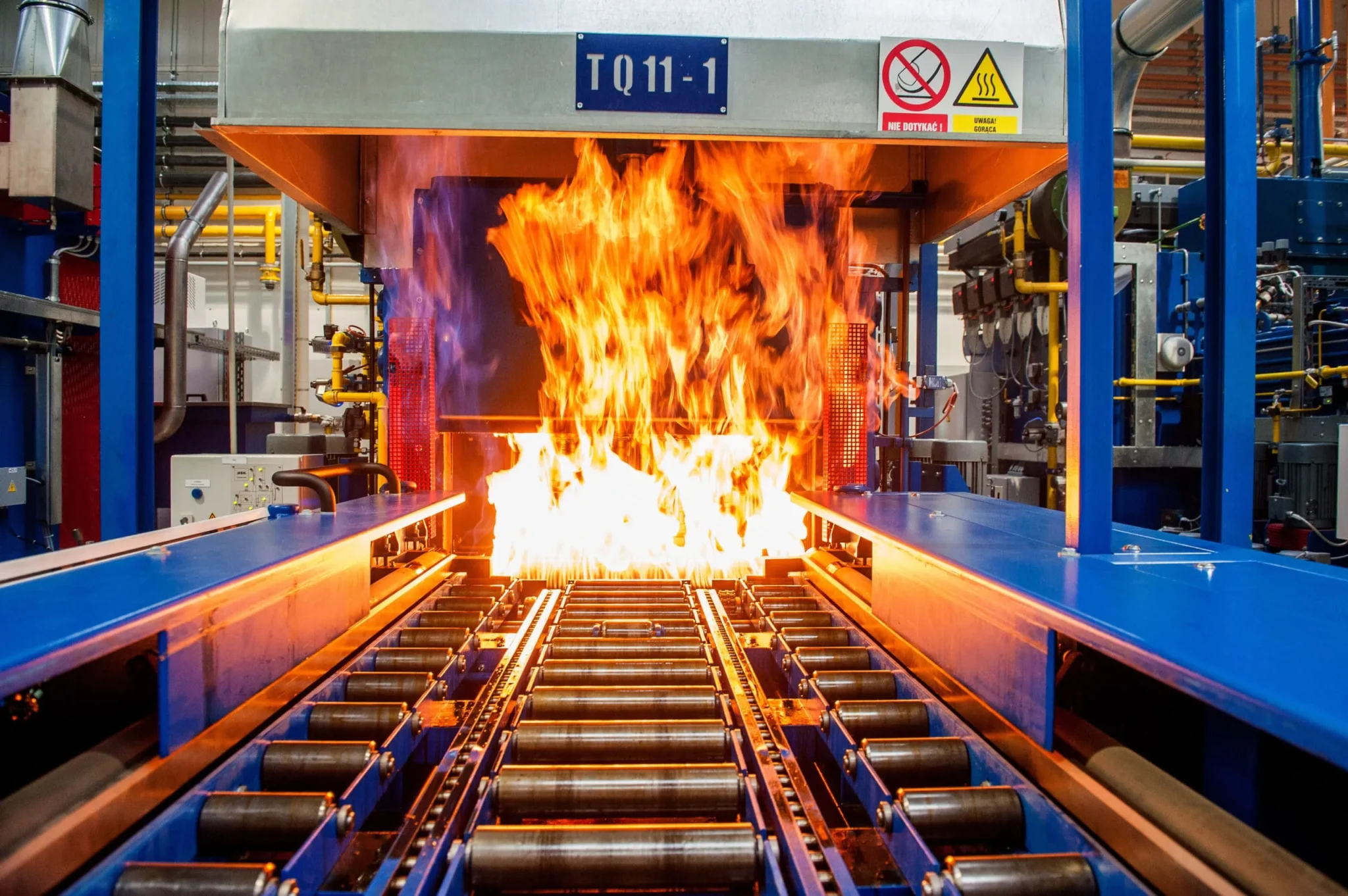
Annealing is where steel is heated to a temperature above its critical point and then slowly cooled in the furnace. This softens the metal, enhances ductility, and refines the grain structure.
-
Isothermal Annealing is a controlled cooling process where steel is cooled rapidly to a specific lower temperature and held until transformation is complete. Produces a uniform, fine-grained structure.
What it does:
-
Parts that require deep drawing, forming, or heavy machining.
-
Precision components where consistency in hardness and microstructure is critical.
Best suited for:
-
Stress-free, uniform structure for further processing.
-
Easier machining with reduced tool wear.
Ideal if you’re looking for:
Sub-Zero Treatment (up to -70°C)
-
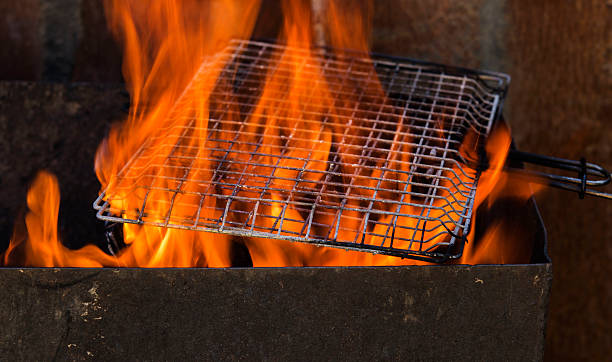
After hardening, steel may retain austenite that hasn’t transformed into martensite. Sub-zero treatment involves cooling parts to -70°C to complete this transformation, increasing dimensional stability and wear resistance.
What it does:
-
High-precision tools, cutting dies, aerospace components.
-
Parts with tight dimensional tolerances and high wear demands.
Best suited for:
-
Enhanced dimensional stability during long-term service.
-
Maximum wear resistance and transformation of retained austenite.
Ideal if you’re looking for: